
The Way of the Elephants: Facing the (Gentle) Giants of Chiang Mai
by the Travelling Titas (words by Apple Llave, photos by May Llido)
Not for your entertainment, and certainly not as beasts of burden. The elephants you call “talented” because they can paint or write their names have often endured unimaginable cruelty.
Meanwhile, at Elephant Nature Park (ENP), the gentle giants are just free to be themselves, far from their past lives of being circus performers, landmine detectors, and transport animals for illegal loggers. Here they don’t paint, pose, or ferry. Instead, the community’s way of life is guided by them. “For years, they have been controlled to perform difficult tasks, even illegal ones, but here, all we make sure is that they are happy and healthy”, said Khun Oh, our tour guide.
About an hour from Chiang Mai’s city center, the road winds through lush jungle. At its heart lies a sanctuary where 125 Asian elephants are finally living freely after decades of abuse, with their own names, families and herds, and unique personalities. Every one of them is well accounted for, microchipped and monitored by both ENP and the Thai government to prevent animal trafficking. They even have their own ‘passports’!
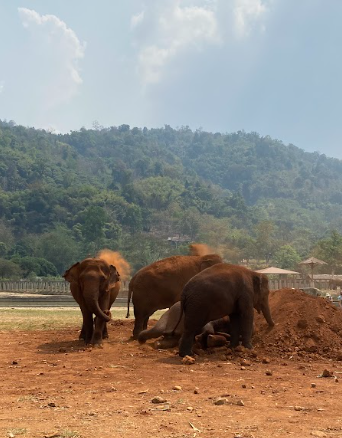
Mud bath! Did you know that ENP orders tons of this special soil rich in minerals and electrolytes to keep the elephants healthy? I say, dasurv!
The Golden One
But the story of ENP would not exist without its founder, Saengduean ‘Lek’ Chailert, who was born in 1961 in a mountain village in Northern Thailand. After saving the life of a young man, Lek’s grandfather, a traditional healer, was gifted an elephant named ‘Thong Kham’, meaning Golden One. Lek developed a strong bond with Thong Kham, sparking a lifelong connection and respect for elephants that shaped the course of her life.
Dubbed as the ‘Elephant Whisperer’, Lek runs ENP with her Canadian husband and fellow conservationist, Darrick Thomson whom she met at the sanctuary in 2006. Lek has been rescuing elephants since the 90s. She leased a piece of land and started with three elephants, growing the herd to 125 to date, earning respect and accolades from all over the world along the way.
‘The Legion of Honour’* dwells among Lek’s dozens of distinctions. In 2022, President Emmanuel Macron conferred Lek with the Legion d’Honneur for her work in environment and elephant conservation. Recently, Lek was presented with ‘Thailand Leadership Awards 2026’, by the World Sustainability Congress in Bangkok. The award honors outstanding individuals and organizations who create meaningful impact and drive sustainable environmental and societal change in Thailand.
Friends, not food
True to their mission as an ethical animal sanctuary, ENP has no animal products for sale nor consumption. During our overnight stay, we were nourished with full board vegan meals. No dairy, meat, egg, or fish! Nevertheless, the buffet-style Thai dishes are a delicious treat for both vegans and non-vegans alike.
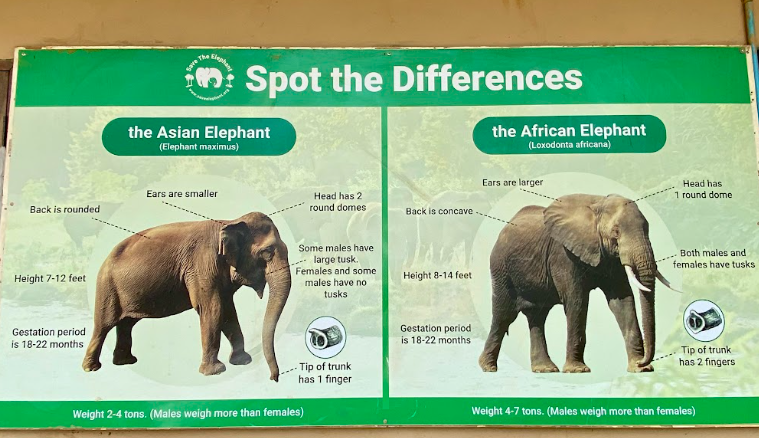
In spite of their towering size, elephants live on a purely plant-based diet. They can detect if an insect as small as an ant is in their food, which is why they usually shake the cornstalks or grass first before they chomp it. Nature is really amazing, no? Imagine if these big-brained beautiful beasts are savage carnivores… smart and weighing close to a ton, we won’t stand a chance! They would be the rightful king of the animal kingdom.
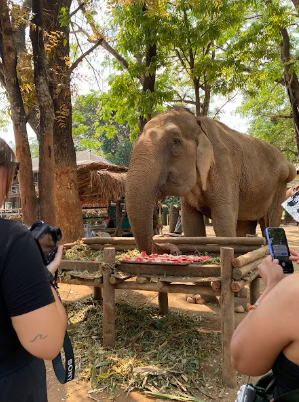
Grandma enjoying the Elephant Cake we prepared for her. As the oldest elephant in the sanctuary, her mahout makes sure that her food is softer and cut in smaller pieces.
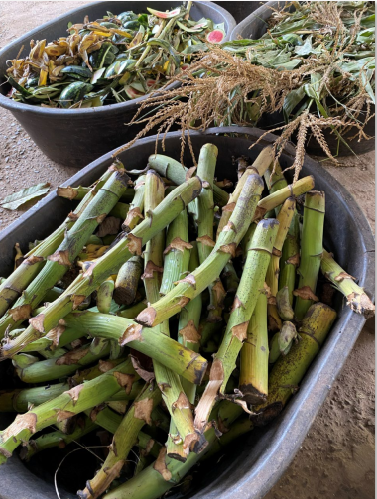
Some of the elephant’s staple food: cornstalks, watermelon rinds, and banana stems.
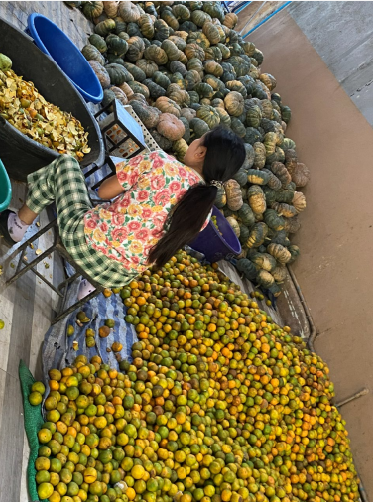
Every day, ENP staff and volunteers work tirelessly to make sure every elephant eats well. About 3,000 kilos of elephant food including bananas, pumpkins, watermelons, pineapple, and papaya are delivered to the Elephant Kitchen daily. These are mixed to the elephants’ staple food such as cornstalks and grass.
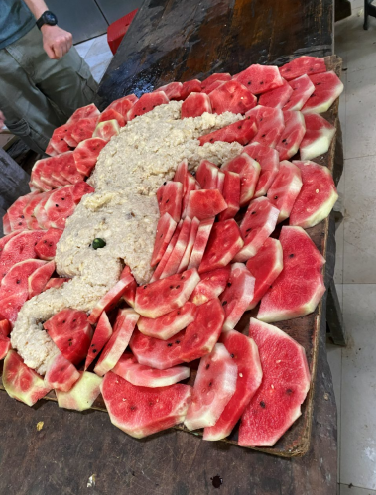
As part of the experience, visitors can help in the Elephant Kitchen by making Elephant Cake consisting of sticky rice with salt (for electrolytes), mashed banana, and watermelon.
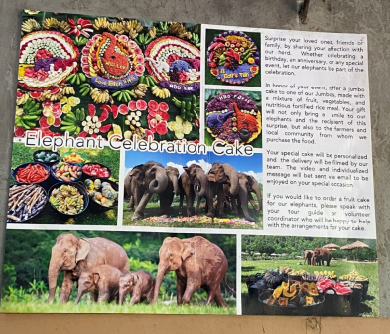
Order a ‘Jumbo Cake’ to celebrate your special moments while also helping elephants and local farmers.
The Broken Spirit
During the course of our excursion, our tour guide, Khun Oh, described the state of the elephants perfectly. The “COVID babies”, or those rescued about four years ago, are confident to just take space while the older ones who suffered from years of abuse have sorrowful eyes. Elephants have great memories that even after their rescue, they still remember how humans broke, not only their backs but more so their spirits. The Park maintains a 1:1 caretaker-to-elephant ratio, and when each elephant is introduced to the herd, the community first ensures that they accept their ‘mahout’. A mahout is what you call a traditional Asian elephant keeper. It is a lifelong profession passed down through generations, helping them form deep, trusting bonds with their elephants. For rescued elephants, it can take time, but once an elephant trusts you, they trust you with their life, for life.
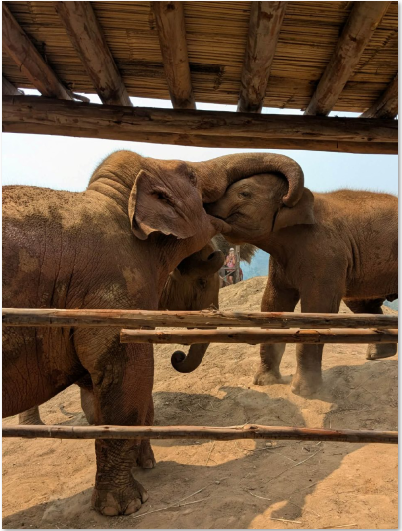
Of playful nudges and food fights! The naughty young ones lighten the place with their bright personality, wandering around the sanctuary and stealing a bite from the oldies’ feeding stations!
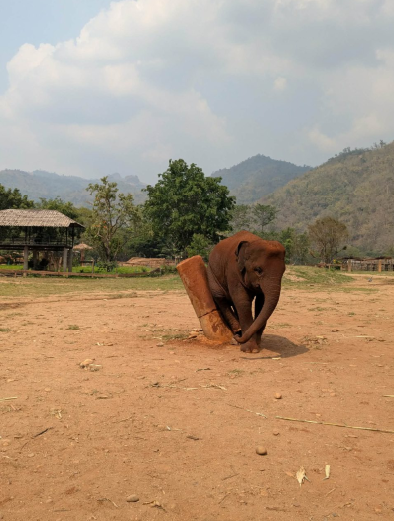
The Park is surrounded with concrete scratch posts for the elephants. They also use it to groom themselves, especially to clean their hooves.
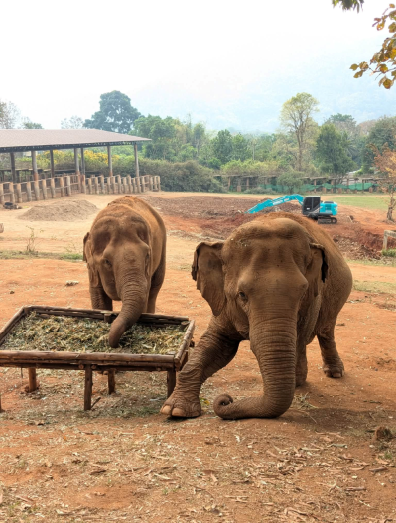
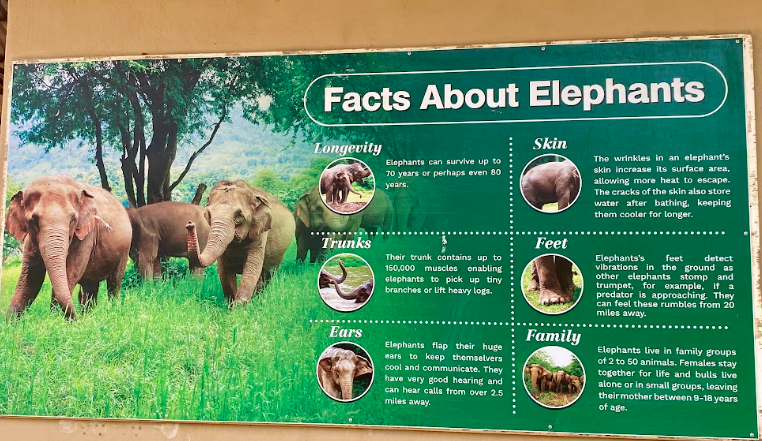
Once a showgirl, always a showgirl! Best friends Gina and Helen strike a pose and brag about their pretty nails! Elephants can also be vain and take pride in cleaning their hooves. Fun fact: Did you know that their feet can detect vibrations in the ground (as far as 3 miles away) as other elephants stomp and trumpet? Wired for their survival, they can feel when a predator is approaching from afar.
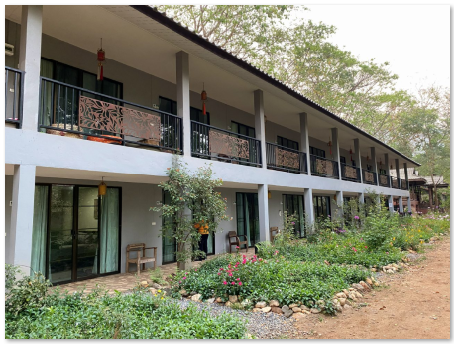
Our overnight accommodation – way better than I expected! Clean and well-kept. There’s no aircon, but there’s no need as the place is cooled by mountain breeze.
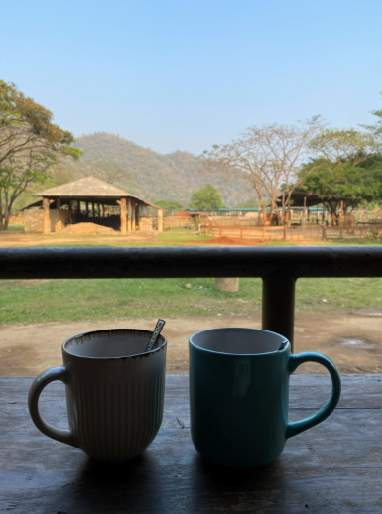
Free coffee while watching the elephants! How’s that for ‘core memory unlocked’? 😊
Ways you can help
The Park is a private organization and does not receive any financial aid from the government. They rely heavily on donations and tourists/volunteers, after all, feeding over a hundred elephants, along with thousands of other animals – including dogs, cats, water buffalo, cows, and pigs – is no easy task. Aside from joining the day tour, overnight or long-term stay, or paid volunteerism, you can help by following their socials. Spread the word, or simply, just be humane and promote the ethical treatment of elephants.
At the sanctuary, they are not just a number, they each have a story that symbolizes survival and striving to live with dignity. When we look closer, we can truly learn a thing or two. At around 4:30 in the afternoon, the elephants move along from the grounds to their shelters, ready to call it a day. By then, kids and young men take their turns and use the field to run or play football. Now, that is a “gentle reminder” of how humans and animals can coexist, peacefully and respectfully.
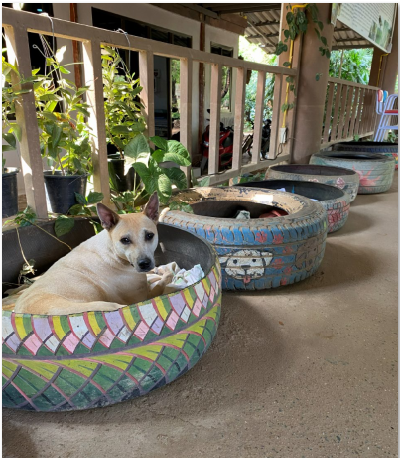
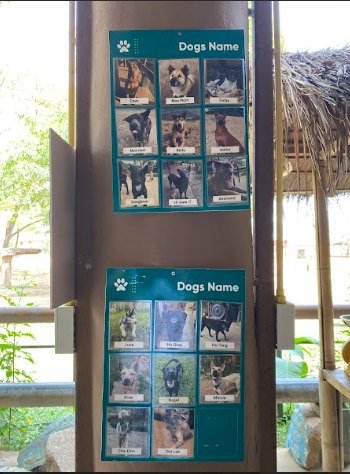
Some of the adorable dogs at the sanctuary – rescued from puppy mills, dog meat trade, and Bangkok floods ☹
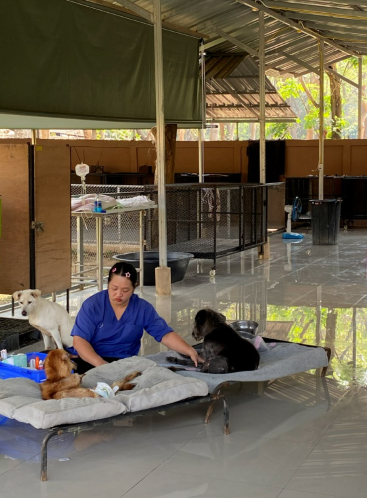
The sanctuary has about a dozen full-time vets looking after the animals.
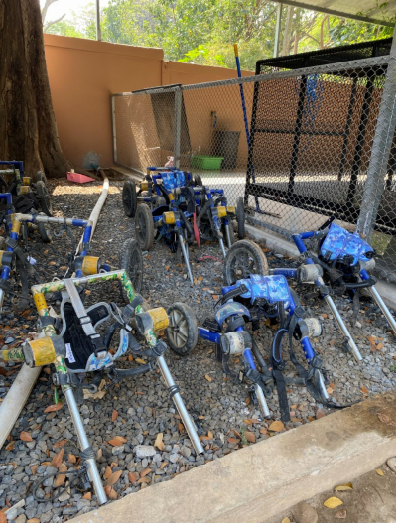
Wheelchair for handicapped dogs ☹ One of the tasks a volunteer can do is walking the handicap dogs. For Php30,000, you can volunteer at the sanctuary for a week – the fee includes lodging and full board meals. May and I only availed the overnight stay for Php10,000 each which includes the activities, guided tour, lodging, full board meals, and roundtrip transportation to our hotel in the city.
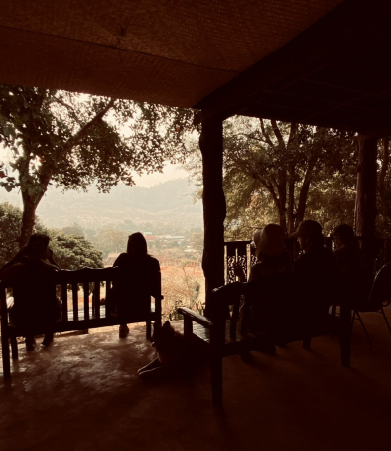
A group of visitors takes a break after an hour of walking around the sanctuary.
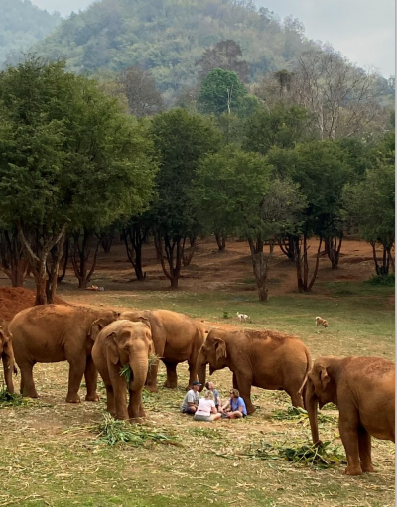
ENP Co-founder Darrick Thomson sitting in a circle with sponsors. Roaming the property by yourself is not allowed – you can only approach the elephants if you are with people they know and trust such as guides, mahouts, and the founders Darrick and Lek.
Championing the community
Aside from advocating for animals and providing local employment, the sanctuary also offers educational training and livelihood programs for the community. The mahouts and their families were trained to make arts and crafts and even to promote their work online, maximizing the use of social media and other new technology! The products created by mahouts were sold through the sanctuary’s online stores and partners worldwide. With elephants eating about 10% of their body weight per day, the local farmers will also never go out of work! ENP has a ‘farm-to-herd’ project which fosters a great mutual relationship between the sanctuary and the local farmers while also ensuring that the elephants get the best crops that serve their dietary needs. Other sanctuary initiatives include scholarship support to underprivileged kids in the local villages, free animal clinic and veterinary care, forest restoration, and building of firebreaks to protect the forest from wildfires, among others.
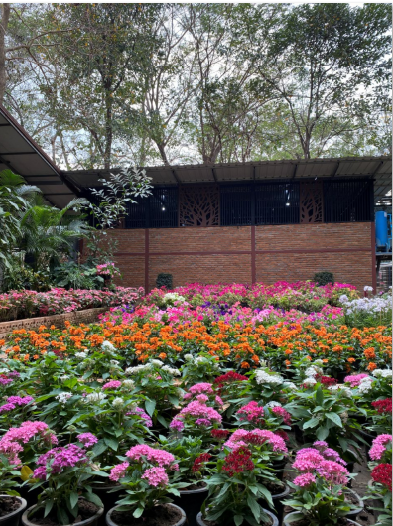
Elephants give back! Look at this beautiful flower garden inside the sanctuary – nourished by elephants’ poops no less hehe.
Make Elephant Nature Park part of your trip to Thailand. Visit their website at www.elephantnaturepark.org to learn more. Follow the herd:
Lek’s insta: @lek_chailert
ENP’s insta: @elephantnaturepark
*Established by King Napoleon Bonaparte in 1802, The Legion of Honour acknowledges both French and foreigners who made great contributions to society.
